

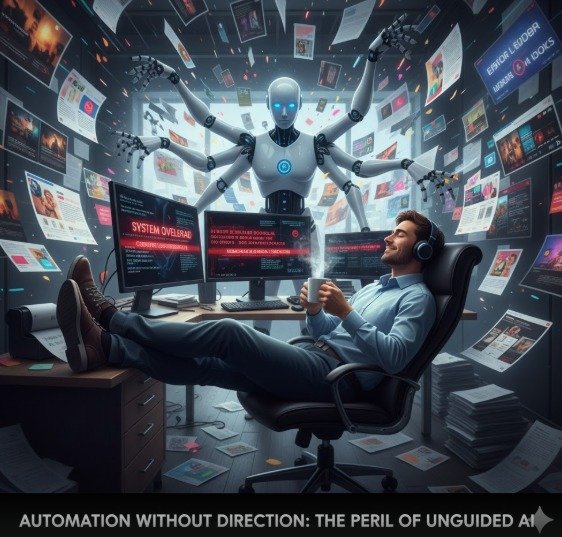
The Myth of “Set It and Forget It”
AI has changed the way we build ads. An AI ad generator can now create stunning, platform-ready creatives in minutes. But if you think great ROI comes from pressing a few buttons and walking away, you’re setting yourself up for disappointment.
The truth is, successful AI advertising isn’t about automation alone. It’s about strategy, how well you direct, train, and collaborate with your AI tool.
Here’s how to get the most out of your AI advertising tools and turn them into ROI-driving machines.
1. Start With Clear Goals
Before you open any AI dashboard, define what success looks like.
Are you trying to build awareness? Drive engagement? Boost conversions? Each goal requires a different kind of creative approach.
AI performs best when it understands your objectives. That means your prompts, creative direction, and performance feedback should all reflect your campaign’s intent.
If your goal is engagement, ask the AI for ads that encourage interaction. If it’s conversions, focus on urgency and clear calls to action. Clarity isn’t optional, it’s fuel for smarter AI outputs.
2. Use Data-Driven Prompts
Most marketers write prompts that are far too vague. Then they blame the AI when the results look generic.
Instead of saying, “Make an ad for my product,” try feeding your AI ad generator something more structured:
“Create a 15-second TikTok ad targeting Gen Z women for a wellness drink. Focus on energy, morning routine, and confidence.”
The difference is night and day.
Precision in equals precision out. When your inputs are backed by audience data, your outputs become instantly more relevant and effective.
3. A/B Test Like It’s a Habit
The beauty of AI? You can generate multiple ad variations instantly, so use that power wisely.
Create at least 10–15 variations of each ad with different headlines, visuals, hooks, and CTAs. Then let data, not opinion, decide which one wins.
Run micro-budgets for each variation before scaling. This small investment helps you identify which creatives actually move the needle without wasting ad spend.
A/B testing isn’t just about performance; it’s about learning what your audience truly responds to.
4. Integrate With Analytics
An AI tool without analytics is like a car without a steering wheel, it can move, but it won’t go far in the right direction.
Integrate your AI advertising tool with platforms like Google Ads, Meta Ads Manager, or Mixpanel. This allows real-time performance data to flow back into your creative process.
When your AI has access to live data, it can adapt and evolve your creatives based on what’s actually performing, not what’s assumed to work.
This is where automation meets intelligence, and where your ROI starts to climb.
5. Feed AI With Winning Campaigns
AI learns from patterns, just like marketers do.
If you want better output, feed it your best-performing campaigns. Upload past creatives that worked well, the visuals, tone, and copy that connected with your audience.
This helps your AI ad generator understand your brand’s unique identity and emotional triggers. Over time, it will start to generate content that feels more “you.”
The more quality data you provide, the smarter your AI becomes.
6. Personalize Creatives by Audience Segment
Gone are the days of running one-size-fits-all ads.
Use your AI ad creation tool to build micro-segmented campaigns tailored to specific audience groups. For instance:
- Different visuals for various age ranges
- Unique messaging based on buying intent
- Tone adjustments by platform (funny for Reels, formal for LinkedIn)
This kind of personalization drives relevance, and relevance drives ROI.
Automation can still be personal if you guide it with the right data and audience insights.
7. Don’t Skip Human Review
AI is fast, but it isn’t flawless.
Even the best AI ad generator can misinterpret tone, exaggerate claims, or use visuals that feel slightly “off-brand.”
Before publishing, always review each creative for emotional accuracy, brand tone, and compliance.
AI gives you speed, but humans provide taste. The best campaigns blend both.
8. Refresh Creatives Frequently
Creative fatigue kills ROI faster than poor targeting.
Even the strongest ads lose their spark after repeated exposure. Use AI to your advantage by setting a routine for creative refreshes, ideally every 2 to 3 weeks.
The good news? AI makes this effortless. You can generate new ad sets in minutes without overloading your design or content team.
This constant refresh cycle keeps your audience engaged and your performance metrics climbing.
9. Automate Feedback Loops
Most AI ad generators today come with analytics dashboards and performance-tracking features.
Enable the auto-learning or “creative intelligence” mode if available. This allows the system to automatically pause underperforming creatives and prioritize the ones generating better results.
By closing this feedback loop, your campaigns become self-improving, reducing manual analysis while maximizing results.
Think of it as your marketing autopilot for optimization.
10. Combine AI Insights With Human Intuition
AI is brilliant at spotting patterns, but it doesn’t understand why something resonates.
That’s where human intuition comes in.
Use AI data to identify trends and behaviors, but rely on your marketing instincts to interpret them. Maybe the AI shows that humorous videos perform better, your job is to figure out what kind of humor aligns with your brand personality.
When you combine data with intuition, you turn insight into strategy.
Final Take
Maximizing ROI with an AI ad generator isn’t about doing less work, it’s about doing smarter work.
AI gives you creative speed, scalability, and data-backed insights. But real success comes from how you direct and refine it.
Use your AI as a creative laboratory. Experiment constantly, test ideas quickly, and let the results guide your strategy.
The better your inputs, the stronger your outcomes.
Because in the end, AI in marketing isn’t replacing creativity, it’s amplifying it. The brands that learn to work with AI, not against it, will be the ones turning automation into growth and data into results.